Claude Skills: what they actually are, and which ones a marketer can use
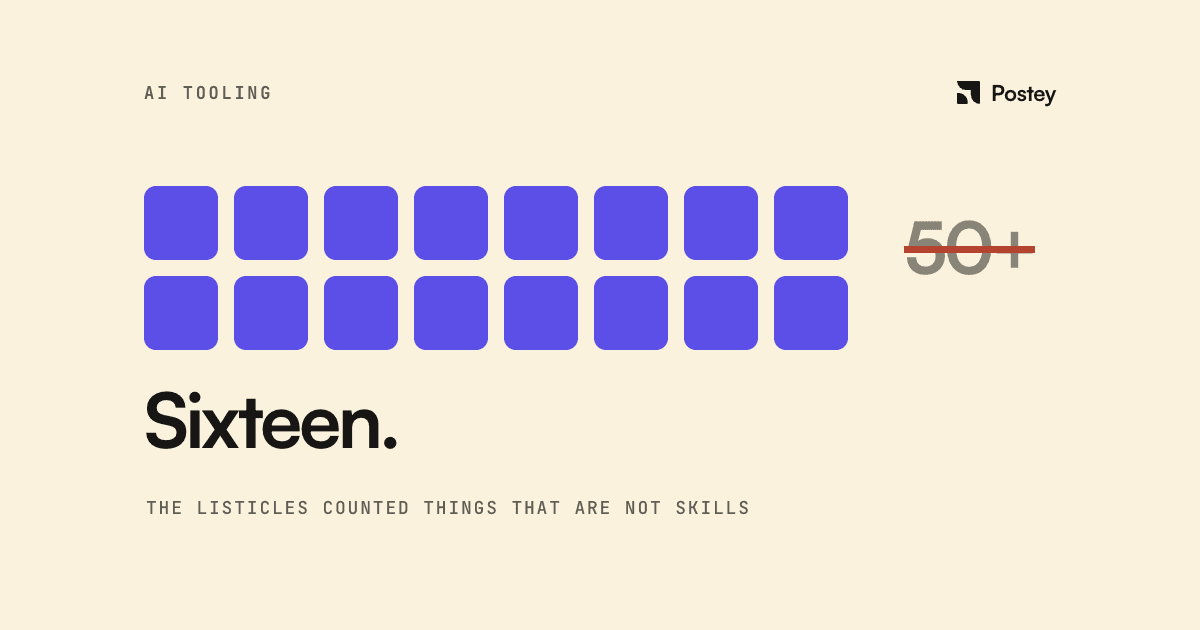
Anthropic's official skills repo has exactly 16 example skills, not the "50+" some roundups imply. Most of them are developer tooling. Of the 16, eight have a real use for marketers, and the rest are demos you have to adapt before they earn their place in a workflow.
What a Claude Skill is
A Skill is a folder: a SKILL.md file plus optional scripts, templates, and reference docs that Claude reads off disk when the task calls for it. No new model, no magic. Just better instructions loaded at the right moment, plus reusable scripts that don't pollute the conversation with code.
The mechanics matter because they explain why a good skill makes a task repeatable while a bad one silently burns tokens on every conversation.
How the loading works
Anthropic built Skills around progressive disclosure, in three layers:
- Every skill's name and description sit in the system prompt at all times, around 100 tokens, so Claude knows what's available without paying for it.
- Claude reads the full SKILL.md, typically under 5,000 tokens, only when a skill actually triggers.
- Bundled scripts and reference files load on demand, and script code never enters the conversation. Only its output does.
The file-creation skills (docx, pptx, xlsx, pdf) shipped in preview on September 9, 2025. The general Agent Skills framework was announced October 16, 2025, and was published as an open cross-platform standard on December 18, 2025. As frameworks go, this one is under a year old.
The eight worth trying
Anthropic's official skills repository has exactly 16 example skills, not "50+" or "100s" as some roundups imply. Of those, eight are genuinely useful for marketing and content work, based on each skill's own stated purpose:
- canvas-design: creates visual art as PNG or PDF (posters, social graphics, standalone pieces).
- algorithmic-art: generative visual patterns, useful for original visuals that avoid stock-photo sameness.
- brand-guidelines: applies consistent colors and typography across artifacts. Ships as a demo of Anthropic's own brand; fork it and swap in your own.
- theme-factory: ten preset font and color themes, applicable to slide decks and landing pages.
- pptx, docx, xlsx, pdf: the production document-generation skills (decks, briefs, trackers, media kits).
- web-artifacts-builder: builds React and Tailwind multi-component pages for interactive landing pages.
- frontend-design: pushes toward distinctive visual direction instead of templated defaults.
- doc-coauthoring: a structured drafting workflow, adaptable to blog posts and briefs.
The other eight (skill-creator, mcp-builder, webapp-testing, and a few others) are developer or meta-tooling, not marketing tools, and this list won't pad them in to hit a round number.
The caveat most "skills to try" content skips
Skills are not new AI capabilities. They're context engineering packaged as a folder. The model doesn't get smarter; it just gets better instructions and reusable scripts. That is valuable for consistency, but a badly written skill bloats every conversation's system prompt. Anthropic puts it plainly:
Use Skills only from trusted sources... a malicious Skill can direct Claude to invoke tools or execute code in ways that don't match the Skill's stated purpose.
Source: Anthropic's Agent Skills documentation, on why source matters more than feature count.
Why a marketer should care about this format at all
This is a real use of the skill model, not a stretch: a skill can carry current platform knowledge (what a given algorithm rewards this quarter, which formats are outperforming) into every draft an AI helps you write. Postey's Skills are built this way. They package current algorithm knowledge into the drafting step, so the captions and hooks they generate are shaped by what works now, not last year's folklore.
Eight of Anthropic's 16 official skills are marketing-relevant, and even those ship as demos you have to adapt, not finished tools. That is a smaller, more honest starting point than most listicles suggest, and a better one to build from. Try Postey when you want the same skill pattern applied to current platform knowledge instead of static demos.