Most "I handed my socials to an AI for a month" content is fictionalized, or it quietly skips the boring weeks. Here's what a real month looks like: what agent-connected scheduling can do today, what it can't, and where you still need to show up.
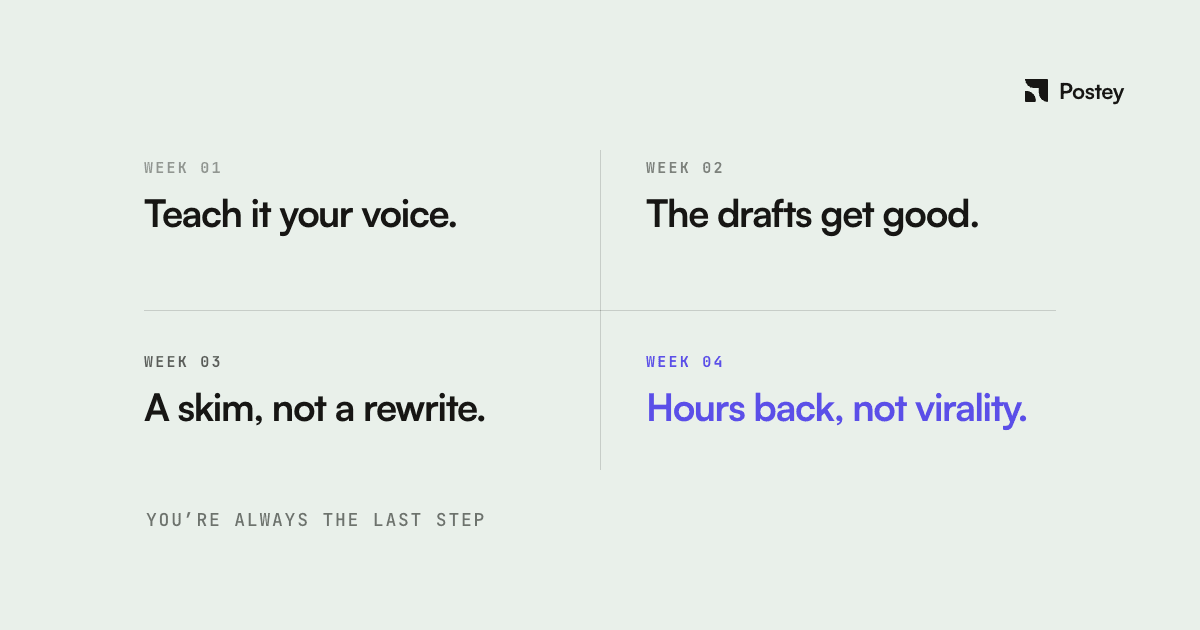
Week 1: setup takes an afternoon
Connecting an AI assistant to an MCP-enabled scheduler is fast. Authorize the connection, and the assistant can see your accounts and drafts. The real week-one work is teaching the agent your voice: posts you like, corrections to its first few drafts, a clear answer on what "our tone" means. Skip that and the autopilot will churn out generic-sounding content.
Week 2: drafting gets good, engagement doesn't
By week two, the drafting and repurposing layer does useful work. That part of the AI social tool stack is mature. Replying to comments and DMs at scale doesn't get automated, and shouldn't. LinkedIn's User Agreement bans bots from commenting, liking, or sharing without authorization. X's Developer Policy requires explicit consent before automated replies. Any "autopilot" that claims to handle engagement is either in a policy grey zone or not doing what it says.
Week 3: the review step stops feeling like friction
Every credible agent-connected scheduler, Postey included, keeps a review step before anything publishes. In week one it feels like a chore. By week three, once the drafts are close to what you'd write, the same step is a two-minute skim instead of a rewrite. The human-in-the-loop design gets faster as trust builds. It doesn't disappear.
Posts created through your AI assistant land in your queue as drafts or scheduled posts. You're always the last step.
Week 4: the gain is time, not virality
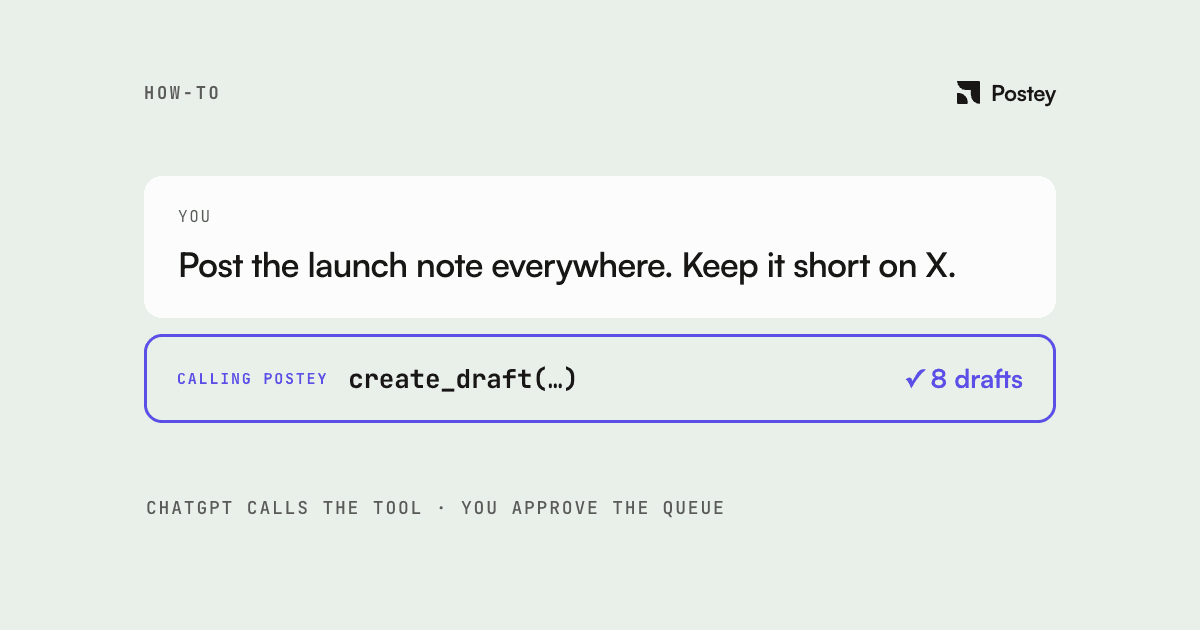
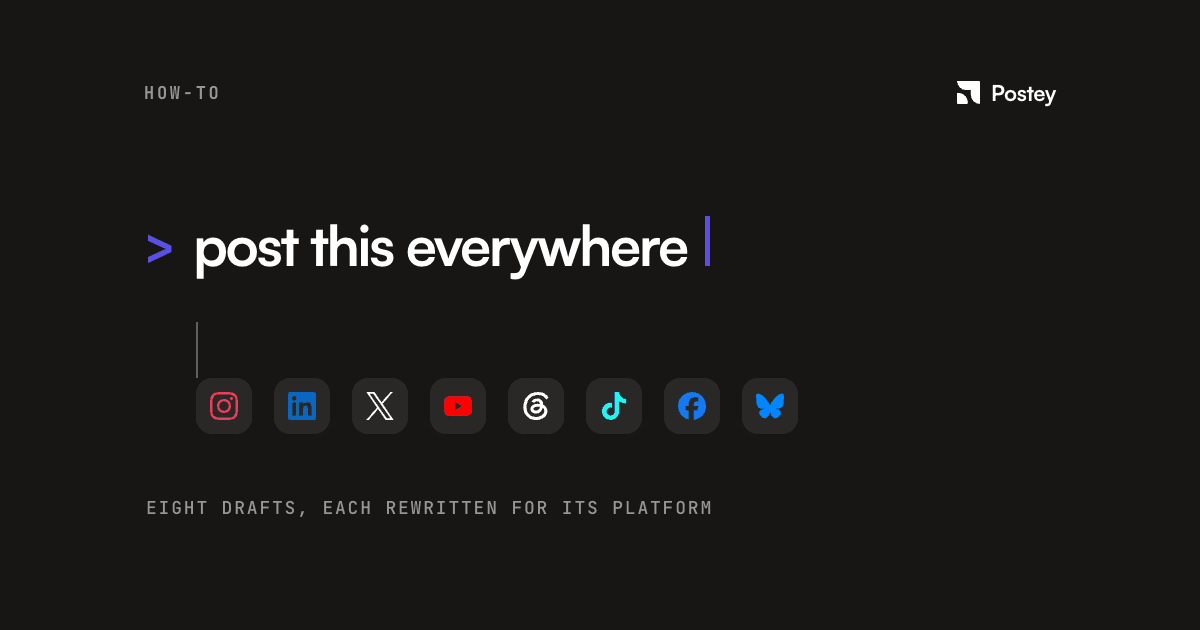
A month of this isn't a growth hack. It's hours back. The work that used to mean eight composer windows, one per platform, becomes one conversation: describe the week, get platform-tailored drafts, approve them. That's the real time saved. It's not a shortcut to virality. Anyone selling that from automation alone is overselling.
What doesn't get automated, and shouldn't
Three things stay with you. Strategy calls: what to post this week and which platform to lean into. An agent can inform them, not make them. Real engagement: actually replying to people stays manual. It's valuable done well. Automating it at scale runs against most platforms' rules. The publish decision: every serious tool in this category leaves it with you.
If you want to try this yourself
- Start with drafting and scheduling, not engagement. That's where the tooling is mature.
- Spend week one giving the agent examples of your voice. Output quality tracks with how specific your feedback is.
- Keep the review step. Once drafts earn your trust, treat it as a skim.
- Measure the right thing: hours saved and consistency kept, not overnight follower growth.
The shape of a month on autopilot: time saved, a useful drafting layer, and a human still holding the publish button on purpose.