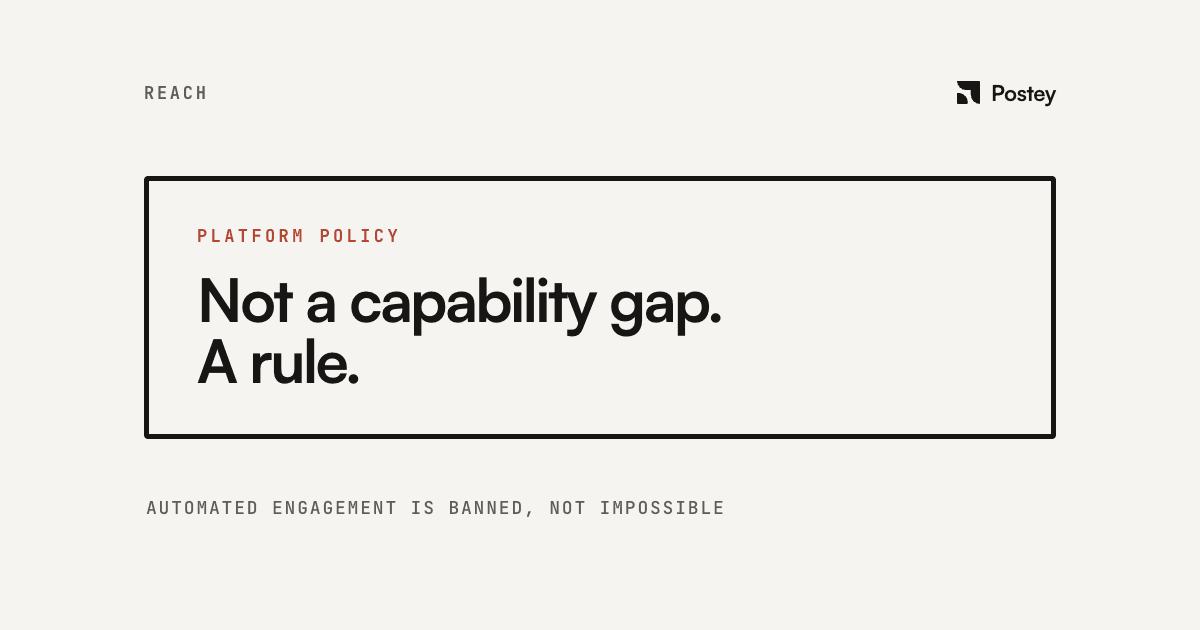
LinkedIn's own User Agreement bans bots from commenting, liking, or sharing without authorization. X requires explicit consent before automated replies. The limits on AI 'running your socials' are policy problems rather than capability gaps: here's the honest state
AI drafting and publishing are real. But auto-engagement hits platform rules written to stop it.
Drafting and rewriting: mature, no longer a differentiator
Every major scheduler now ships an AI writer: Buffer's AI Assistant, Later's Caption Writer, Hootsuite's Wisdom AI, Sprout's AI Assist. This layer works, and nobody markets it as a breakthrough anymore; it's assumed, like spellcheck.
Scheduling via agents: real, but every vendor keeps a human gate
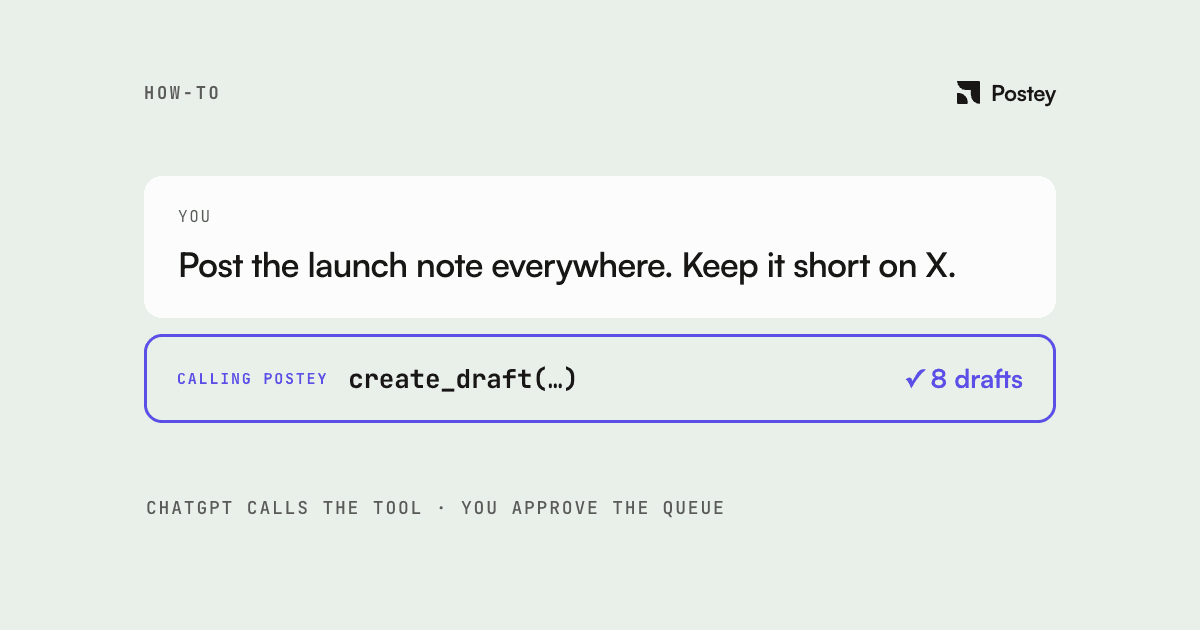
The newest shift: at least six tools (Buffer, Metricool, Vista Social, Planable, FeedHive, and Postiz) confirm an actual MCP server that lets AI draft and queue posts by natural language. Every documented flow still needs a human step before publishing.
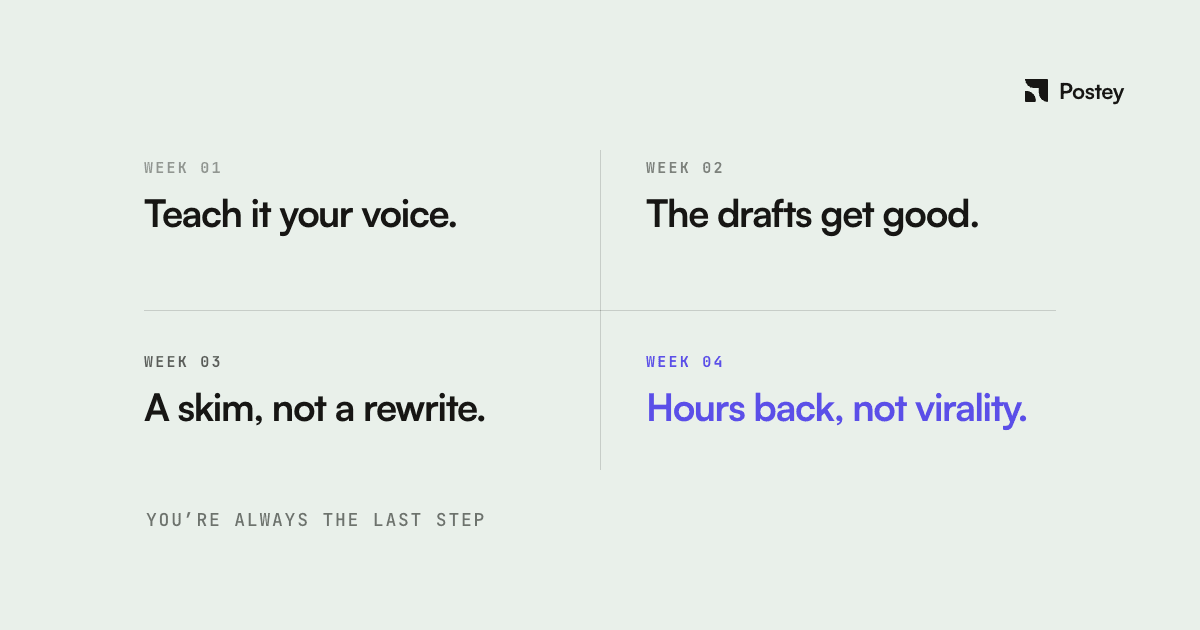
You're always the last step: posts created through your AI assistant land in your Buffer queue as drafts or scheduled posts, ready for your final approval.
Source: Buffer's own MCP documentation. Postey follows the same principle: an agent can draft, adapt, and queue a post, but a person still publishes.
Auto-engagement: mixed maturity, and a real policy problem
LinkedIn's User Agreement explicitly bans bots that would "create, comment on, like, share, or re-share posts, or otherwise drive inauthentic engagement." X's Developer Policy requires "explicit consent before sending people automated replies or Direct Messages," and bans "bulk, aggressive, or spammy actions."
Some vendors still sell auto-engagement into the grey zone. Scaled automated DM sequences create a live tension between what tools pitch and what platforms permit.
Strategy and analytics: still needs a human
Vendors call it an "AI teammate," not an "autonomous manager." The read-as-liability-awareness matters: vendors know the legal risk of positioning AI as fully autonomous.
Full autonomous "run my socials": overhyped, and not by the vendors
Overhyping comes from third-party creator and agency marketing, not tool vendors. The people who built these agent capabilities are more conservative about their limits than courses and creators selling "fully autonomous" social media management.
What this actually means for your workflow
- Let AI draft and adapt content — it's mature and reliable. Treat drafting like spellcheck; it's already solved.
- Use agent-driven scheduling for logistics, but keep the confirmation step — good practice and, on several platforms, close to a policy requirement.
- Avoid auto-DM and auto-reply tools built against explicit platform consent rules, whatever their pitch promises. LinkedIn bans unauthorized commentary/likes/shares; X requires opt-in for automated replies or DMs.
- Treat AI-suggested strategy as a draft opinion, not a decision. LinkedIn warns AI content "might be inaccurate" and recommends reviewing before sharing.
Most coverage frames the limits as "the AI isn't good enough yet." It's really a policy and liability question: doing automated engagement well violates multiple platforms' own rules — not a technical gap. Draft with AI, schedule with an agent, and leave a person on the publish button.