Postey vs Hootsuite for Twitter (X) Scheduling: Honest 2026 Comparison
Both tools schedule X posts in 2026, but the difference shows up where it matters: queue depth, per-seat pricing, and what you can do once the post is scheduled. Here's the honest read, no affiliate spin.
The price gap is wider than it looks
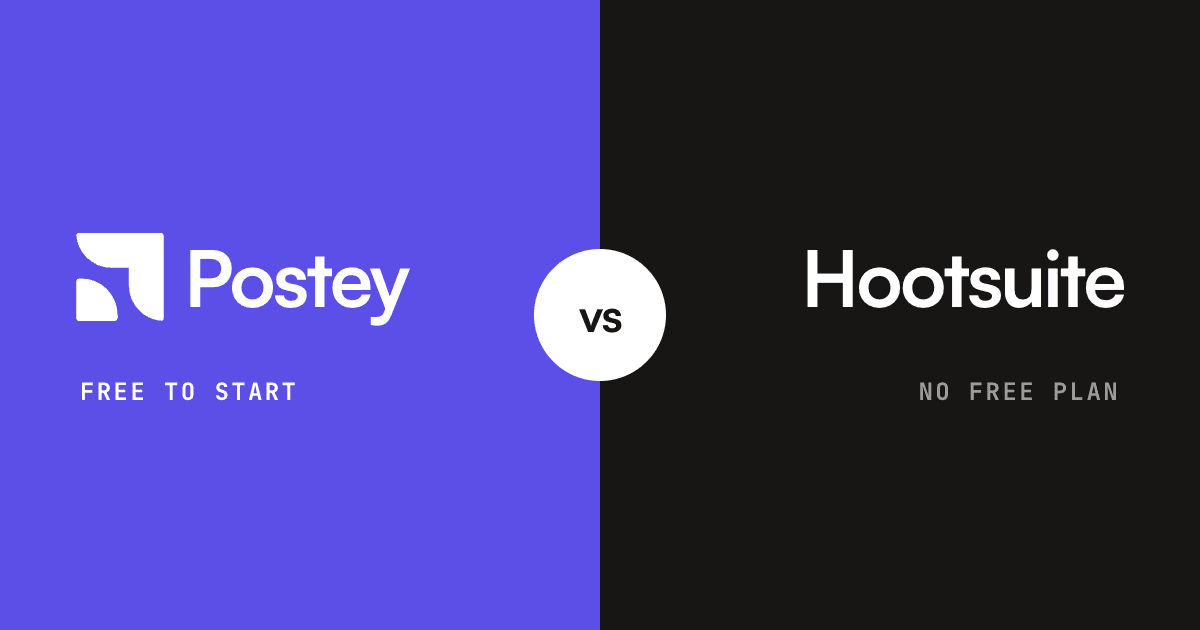
Hootsuite's Professional plan starts at $199/month per seat for one user. Add more users, add more social profiles, and the bill climbs fast: a team of three on the Team plan is around $600/month. Free trials exist, but no permanent free tier.
Postey's pricing is per connected account, not per user. One person scheduling to eight platforms pays less than $20/month. Adding a second team member doesn't double the cost the way per-seat tools do. For a solo creator or a small team running multiple X accounts, Postey is cheaper by roughly an order of magnitude.
Queue depth and scheduling horizon
Hootsuite lets you schedule individual posts any distance into the future, with no hard cap on how many posts sit in your queue. Bulk compose exists.
Postey supports both scheduled posts and recurring time slots: set a slot, and every new post you assign to that slot gets queued at the next matching time. That's a different workflow from manual scheduling per post, and it's faster if you post on a steady cadence (say, weekdays at 9 a.m.). If you want one-off scheduling far into the future, both tools handle it.
Drafts, threads, and X-specific features
Neither tool is X-only, so neither is a perfect fit for every X-specific quirk. Here's where each one falls short:
- Threads (multi-post X chains): Neither tool lets you visually drag to reorder posts in a thread once queued. Both require you to write them in order and accept that order.
- Drafts vs scheduled: Both let you save drafts and schedule separately. Postey's draft folder is per-platform; Hootsuite is similar.
- Media in posts: Both support image, video, and GIF uploads to X, with size limits matching X's own.
- Analytics: Hootsuite's analytics are deeper (post-level engagement, audience growth, paid vs organic). Postey shows the metrics X itself surfaces, no more.
Who each tool is actually built for
Hootsuite's price makes sense if you're managing a brand with multiple social profiles across a team and you want one dashboard with role-based permissions, approval workflows, and integrations with the rest of your marketing stack. The per-seat cost is the trade for those features.
Postey fits solo creators, small teams, and anyone whose main job isn't social media but who needs to keep a steady presence on X without paying enterprise prices for it. The MCP integration with Claude and ChatGPT means you can also write and queue posts from inside an AI conversation, which Hootsuite does not currently offer.
If you want cross-platform scheduling beyond X, both tools do that. Hootsuite covers more platforms at the higher tiers (TikTok, Instagram Reels, LinkedIn, Pinterest, YouTube). Postey covers the same platforms plus Bluesky, Threads, Mastodon, and Pinterest at every tier.
The honest verdict
If you're a solo creator or small team running X as one of several platforms and price matters, Postey wins on cost without giving up the features most creators actually use. If you're an agency or enterprise running multi-user approval workflows across many brands, Hootsuite's overhead is worth the price.
The biggest trap is paying for Hootsuite's Professional plan to schedule one account to X. That's the same use case as a $20/month tool, and the per-seat model makes it five to ten times more expensive for the same output.