This is the rare timing question YouTube has answered on the record, twice.
The content industry keeps ignoring the answer because the honest version kills the listicle.
YouTube says Shorts timing is not a factor
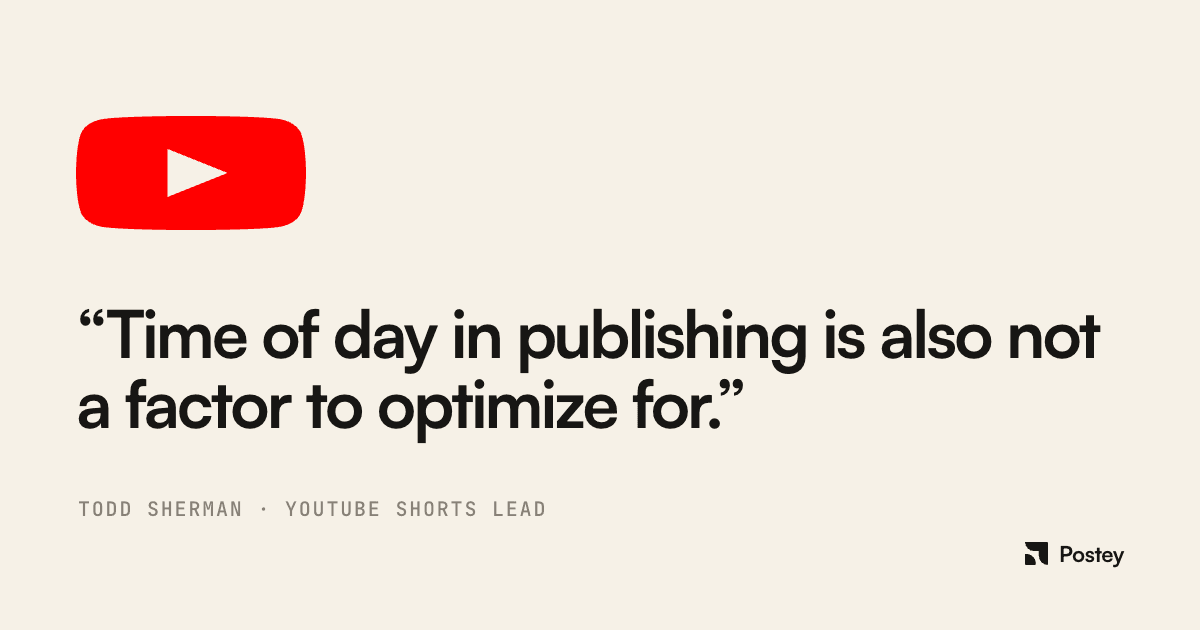
Todd Sherman, YouTube's product lead for Shorts, said: "Time of day in publishing is also not a factor to optimize for," with one exception: news-focused channels. Shorts get recommended over days and weeks based on viewer response, not upload hour.
YouTube's creator liaison Rene Ritchie went further: "Waiting 24 to 48 hours is no different than waiting 24 to 48 seconds or weeks or months." His standing advice: "The algorithm follows the audience, so please the audience."
Long-form timing is an audience question, not an algorithm question
Long-form uploads get a first wave from subscribers through notifications and the Subscriptions feed. Publishing while they're awake and free helps those first hours, so timing still matters.
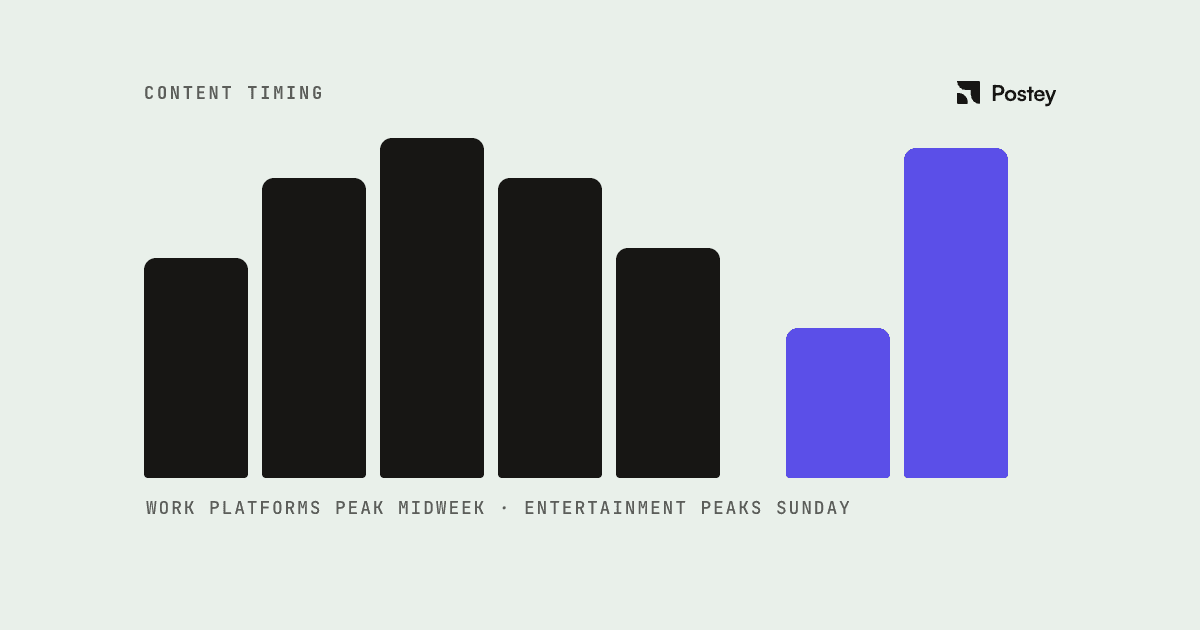
But the third-party charts can't agree on when that is. SocialPilot's study of 301,000 videos says weekday afternoons, 2–4 p.m. Buffer's 52-million-post dataset says Sunday at 10 a.m. Those aren't refinements of each other; they're different answers from different user bases.
YouTube ships the real answer inside Studio: the "When your viewers are on YouTube" report, personalized to your channel and recommended by YouTube's own help pages. A generic chart built on someone else's audience can't beat that.
YouTube is the one platform where reach is growing
Worth knowing while you plan: Metricool's cross-platform study of 39.7 million posts found views per video on YouTube up roughly 30% year over year, while most social platforms declined. If you're deciding where your effort goes in 2026, YouTube is the one platform that's growing, and Shorts are its entry point.
What to actually do
- For Shorts, ignore the clock. Spend the energy on the first two seconds and watch-through, which is what YouTube says it ranks on.
- For long-form, open Studio's viewer-activity report once a month and schedule uploads into your audience's real peak, not a chart's.
- Publish on a cadence your audience can predict. The algorithm doesn't punish gaps, but a steady rhythm builds a habit in your viewers.
- Reuse every video's momentum across platforms. A Short is also a Reel, a TikTok, and an X clip. Postey takes one upload and queues platform-tailored versions, so the same two-second hook works everywhere without eight upload flows.
The ranking listicles skip the summary: Shorts timing is officially a non-factor, long-form timing is your subscribers' schedule, and the only chart worth trusting ships free inside your own Studio. Make the video worth finishing. When you're ready to distribute it everywhere else, Postey handles it in one upload.