LinkedIn is the one major platform openly trying to make your posting time matter less.
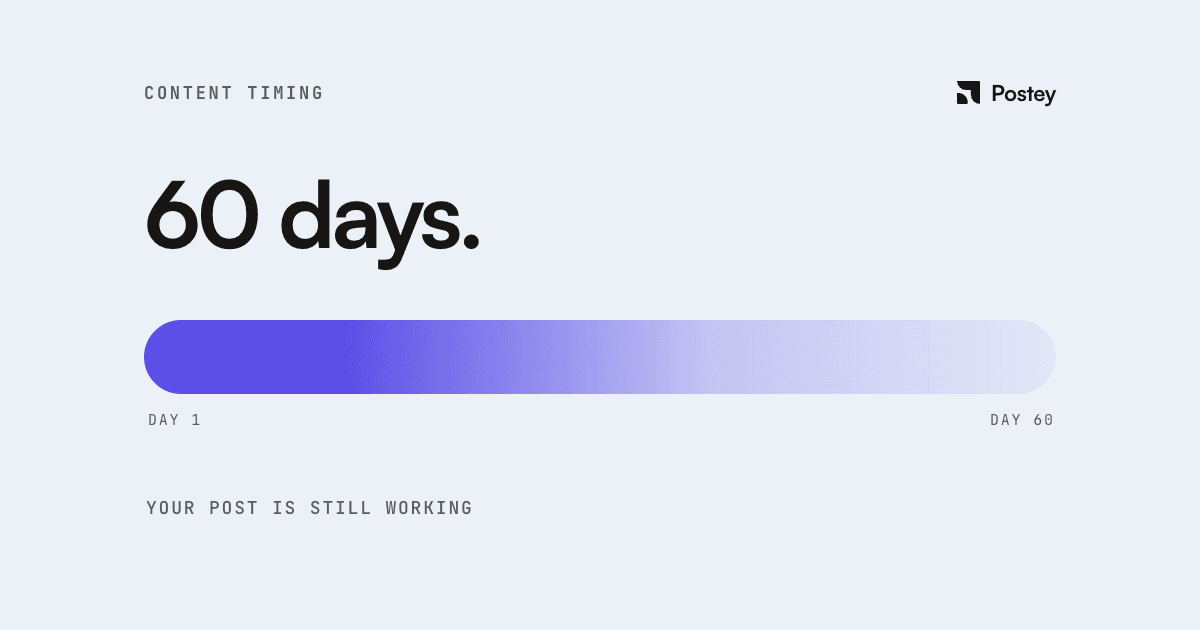
Its suggested-posts system serves content "for months or even years," says Tim Jurka, LinkedIn's senior director of engineering. Its 2026 feed ranker treats post age with a 60-day half-life. Meanwhile, half the internet still sells you a magic LinkedIn hour. Here's how they square.
What the two big studies actually found
- Buffer (4.8 million posts, July 2026): engagement peaks later than the old wisdom says, 3 to 8 p.m., with Wednesday 4 p.m. the top slot and Friday afternoons surprisingly strong. Monday mornings, the classic advice, underperformed.
- Sprout Social (2 billion engagements, March 2026): Tuesday 11 a.m. to 5 p.m., and Tuesday through Thursday.
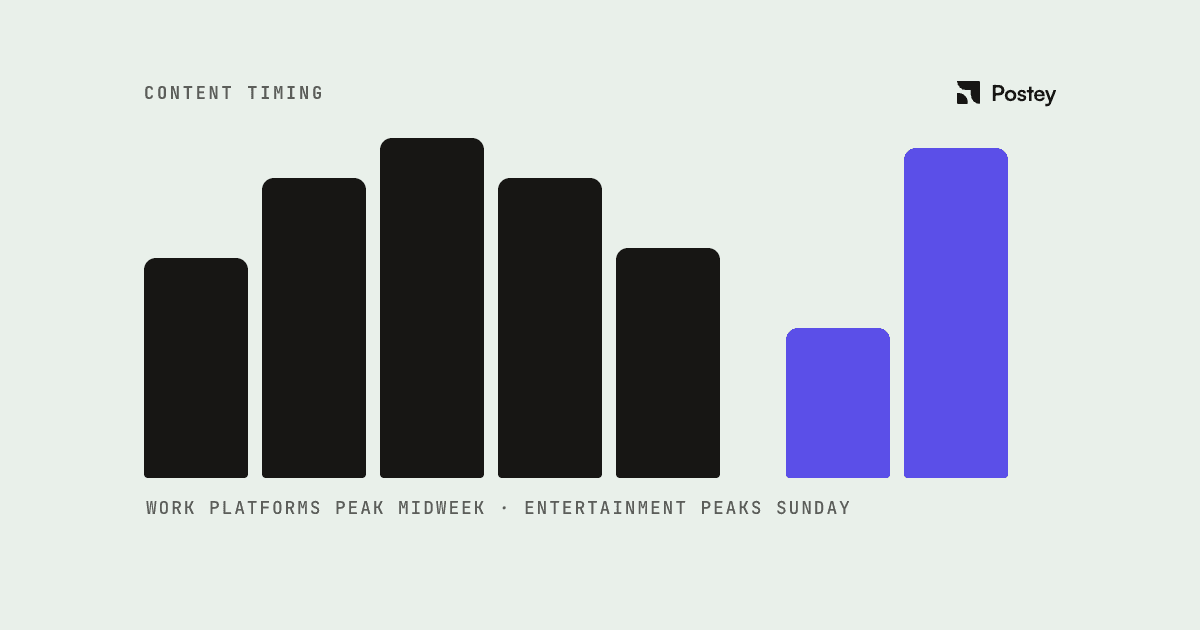
Both datasets agree on one thing: working weekdays beat weekends, decisively. Beyond that, they disagree on morning versus afternoon, which should soften confidence in hour-level precision.
The golden hour has no published evidence behind it
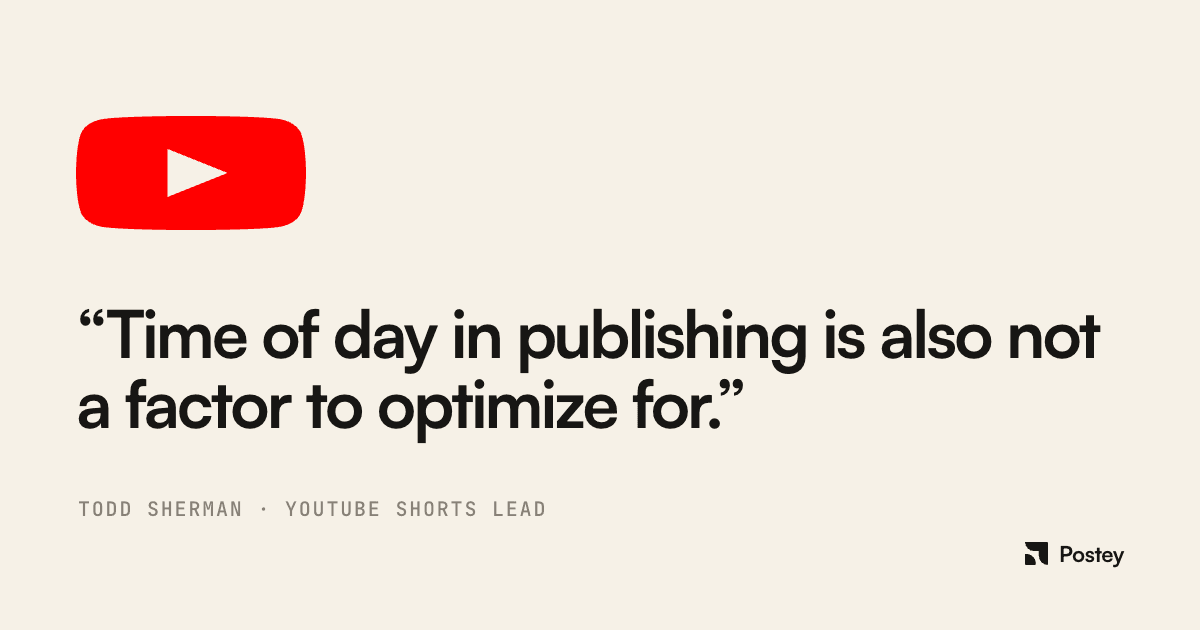
The most repeated LinkedIn timing claim, that the first 30 to 60 minutes decide whether a post lives or dies, appears in no LinkedIn publication. The sources that repeat it publish no sample sizes or methodology. LinkedIn's engineering blog describes ranking on predicted relevance and dwell time, and nobody who runs the feed gives timing advice.
Early engagement helps any post anywhere. But treating the 60-minute mark as a cliff edge is folklore; it leads people to obsessively refresh instead of writing better posts.
Format and identity move reach more than the clock
Metricool's April 2026 study of 673,658 LinkedIn posts found what separates winners:
- Personal profiles earn 63% higher engagement than company pages. If your company's insights live only on the brand page, you're leaving most of the reach on the table.
- Polls earn the highest impressions of any format while making up under 1% of posts, the widest gap between payoff and usage on the platform.
- Total engagement rose 14% year over year while likes fell 13%. People are interacting more but reacting less visibly, so judge posts on comments, saves, and dwell, not the like counter.
A LinkedIn rhythm that survives scrutiny
- Post on working weekdays, the one rule with universal support. Afternoons have the freshest large-scale evidence.
- Write for the long tail, not the launch hour. LinkedIn resurfaces substantive posts for months, so a useful post keeps paying rent long after Wednesday 4 p.m.
- Publish from a person, not just the page, and keep a steady cadence. Consistency is easier when the week's posts are written in one sitting and scheduled. Postey turns one draft into platform-tailored versions, so LinkedIn gets the thoughtful long take while X stays punchy.
- Check your analytics monthly and let them override this article. Your audience's working hours, especially across time zones, are the real chart.
Post on weekdays, write things worth dwelling on, show up as a person, stop watching the clock. LinkedIn built a feed where good posts outlive their publish hour. When you're ready to keep that rhythm without living in the composer, try Postey.