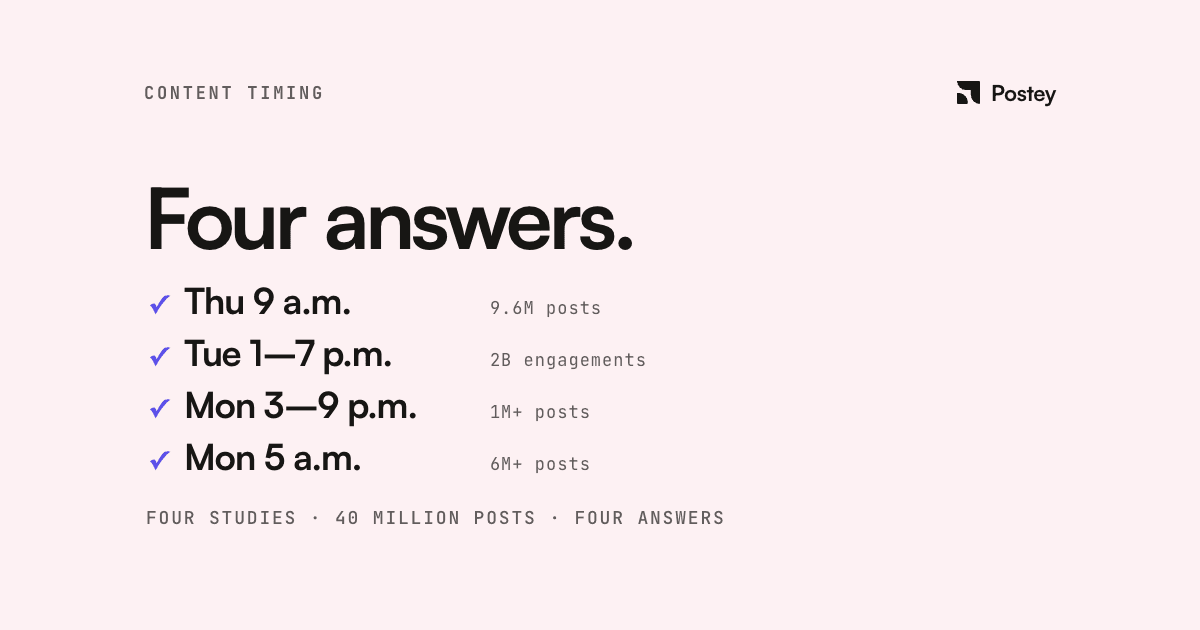
Four companies analyzed more than 40 million Instagram posts to find the best time to post. They came back with four different answers.
Most articles about Instagram timing hide that disagreement, pick one chart, and present it as physics. This one shows you the actual data, because the disagreement is the most useful finding.
The four biggest studies give four different answers
- One large analysis (9.6 million posts, updated July 2026): Thursday 9 a.m. wins, Wednesday is the best day overall, and Reels skew to 6–11 p.m.
- A separate study (2 billion engagements across 307,000 profiles, March 2026): Tuesday 1–7 p.m. and Wednesday 12–9 p.m. Unlike the first study, it found no meaningful timing difference between formats.
- A third report (1 million+ posts, July 2026): Monday 3–9 p.m., with no stated data-collection window, which matters.
- A fourth dataset (6 million+ posts, April 2026): Monday at 5 a.m., and midnight for Reels.
Monday 5 a.m. and Thursday 9 a.m. cannot both be "the" best time. A 5 a.m. or midnight winner is usually an engagement-rate artifact: almost nobody posts then, so the few posts that do face no competition and score a high rate on a tiny denominator. That's low-competition math sold as audience insight.
Timing matters for Stories, barely for Reels
Instagram runs separate ranking systems for Feed, Stories, Explore, and Reels. Stories go primarily to your existing followers, so posting when your followers are awake changes who sees them. Reels go out through recommendations, expanding audience tier by tier over days based on how people respond.
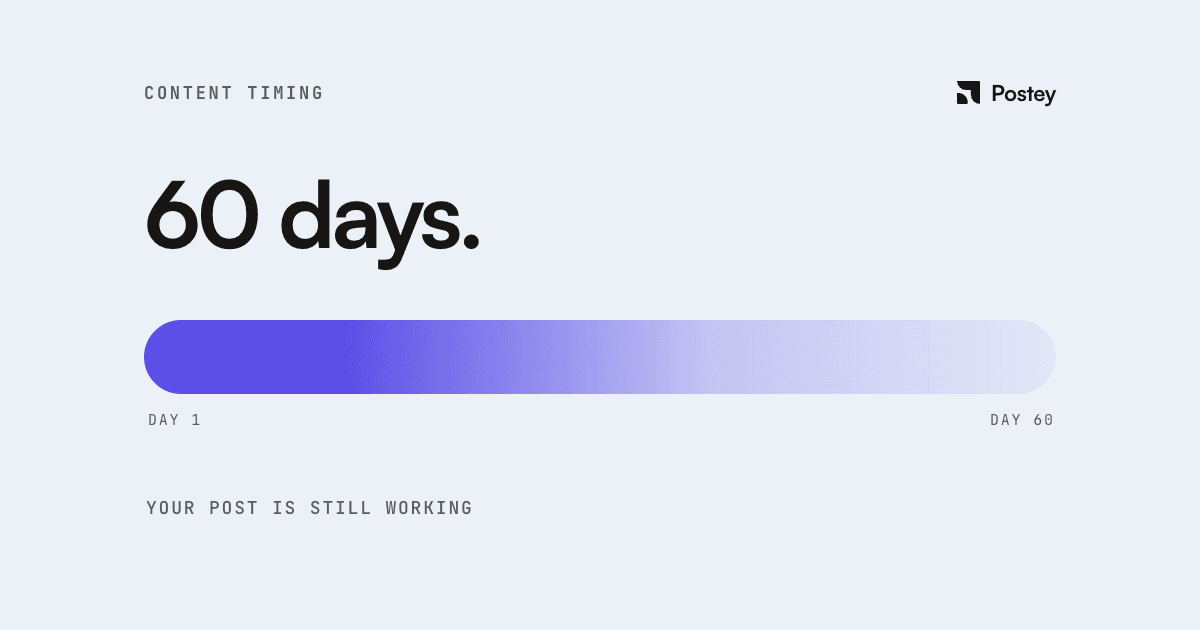
That's why Instagram barely mentions recency for Reels, and why Adam Mosseri said in a 2024 Q&A that sends per reach (how often viewers share a post) correlates with overall reach more than anything else. A Reel people share will keep finding audiences for a week. A Reel nobody shares dies at any hour.
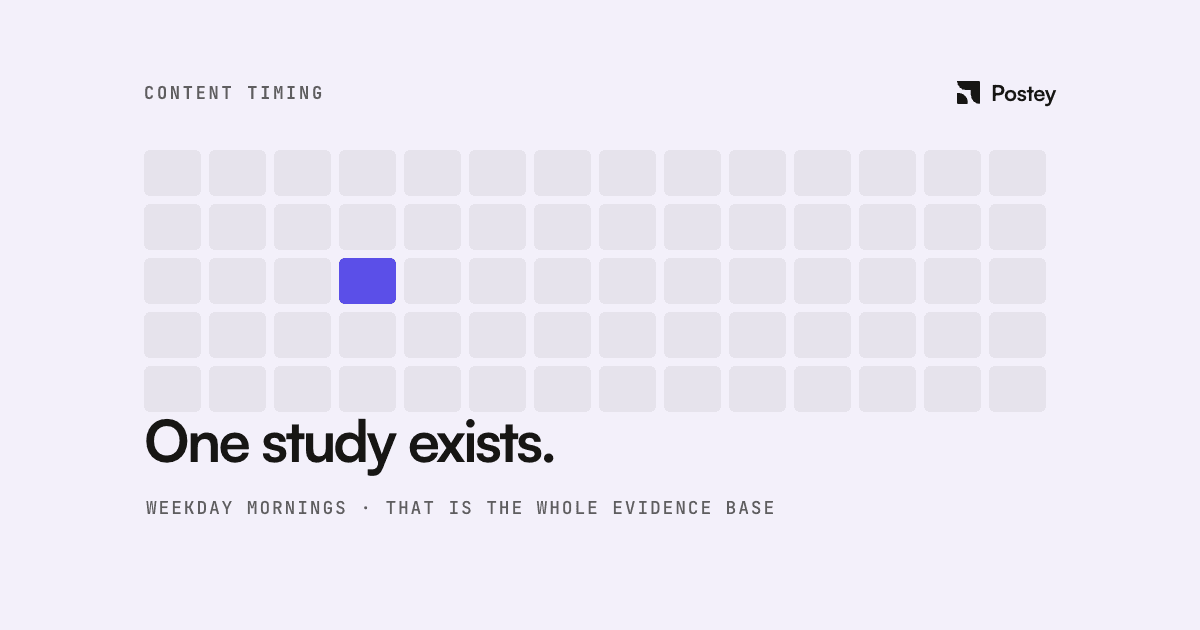
One of these studies notably declines to give a clock time for Stories at all: post them daily, once or twice, when your audience is active. That restraint tells you something about how thin the timing evidence really is.
Format moves reach more than the clock does
While the studies disagree on hours, they agree loudly on formats. One June 2026 study of 24.3 million posts found Reels earning roughly 4x the interactions of single images, carousels collecting about 9x the saves, and single-image reach down 22% year over year.
If you're optimizing, optimize in this order: what you post, how shareable it is, then when it goes out. The hour is the smallest lever of the three.
A posting schedule you can actually defend
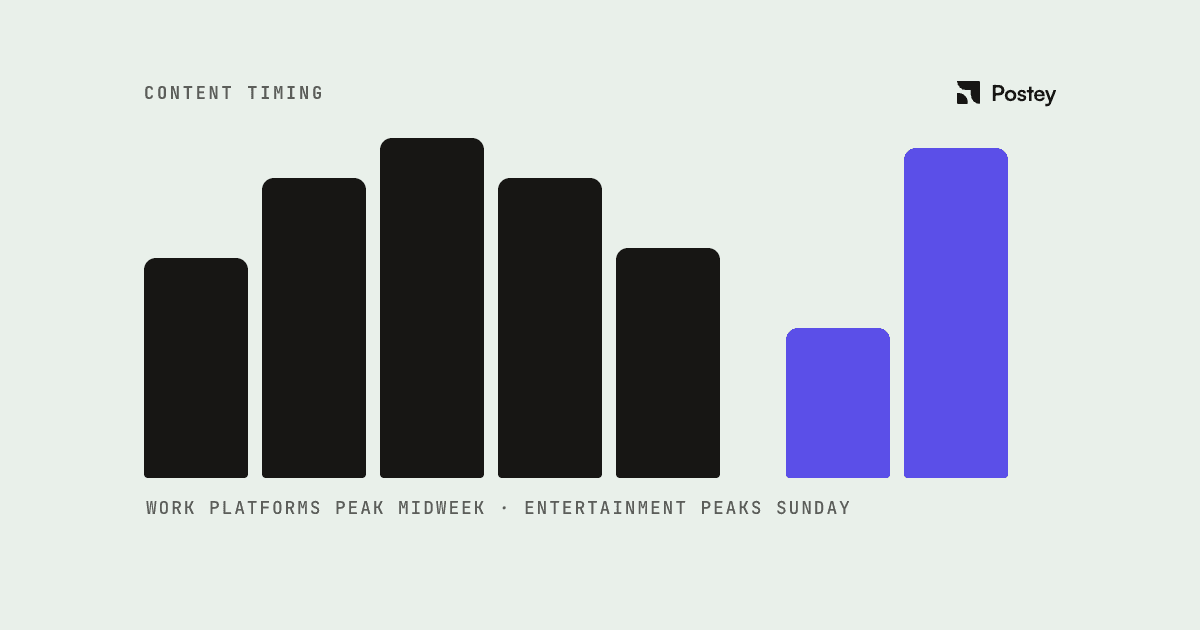
- Default to midweek, waking hours. Tuesday to Thursday, roughly 9 a.m. to early evening, is the only window every major dataset supports. Weekends underperform in both of the biggest studies.
- Check your own numbers monthly. Instagram's insights show when your followers are active: that beats any global chart, because your audience isn't the average of 307,000 profiles.
- Give every post a second window. One publish time catches one part of your audience. Re-sharing at a different active slot catches the rest: that's what Postey's Auto-RT does on X, and what scheduling the same idea into a second slot does elsewhere.
- Let the data set the queue, not your memory. If you use a scheduler with an MCP server (Postey ships one), you can ask Claude or ChatGPT to read your recent post performance and fill next week's queue at the hours that actually worked for your account.
One more number worth keeping: a 2026 engagement report built on 52 million posts concluded that the biggest gap in the data "isn't between good timing and bad timing; it's between posting and not posting." Instagram's median engagement fell 26% last year. The accounts that held reach were the ones that kept showing up.
Pick a defensible default, schedule a consistent week of posts in one sitting, and spend the saved attention on making things people want to send to a friend. If you want the scheduling part to take ten minutes instead of an afternoon, give Postey a try.