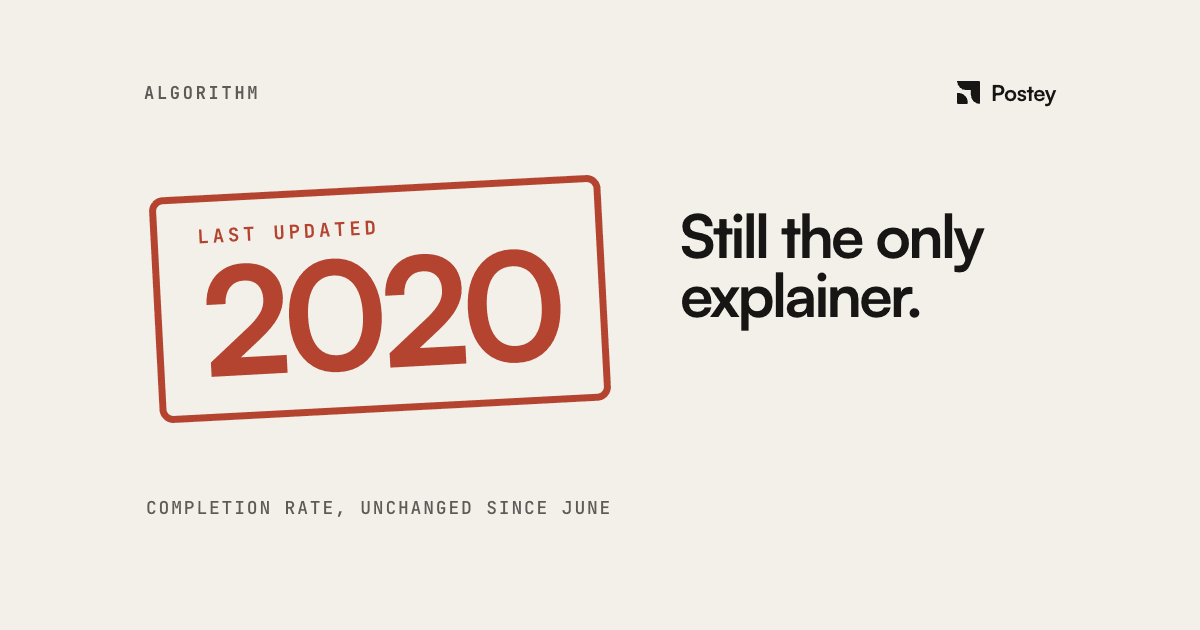
TikTok published its explanation of how the For You feed works in June 2020. Six years on, it's still the live page on TikTok's site, unchanged.
Every article promising "2026 TikTok algorithm secrets" is speculating on top of a six-year-old document. That isn't dishonest: TikTok's system keeps changing. But most of what's sold as a 2026 update is guesswork with a new date on it.
Three signals TikTok has confirmed
TikTok's Newsroom names three categories of ranking signal, weighted by predictive strength:
- User interactions: likes, shares, follows, comments, and the content you create. Full-video completion is the strongest of the three.
- Video information: captions, sounds, and hashtags. This is metadata, not a growth hack.
- Device and account settings: language, country, and device type. These count the least.
TikTok is just as explicit about what doesn't rank a video: follower count and past video performance. A new account's clip competes on the same terms as one with a million followers. What creators call a "small account ceiling" is usually a completion-rate problem.
2026 is a product story, not a ranking-formula story
What shipped in 2025 and 2026 wasn't a new ranking formula. It was a push into Live and creator monetization. In September 2025 TikTok added a "legacy account" option. In August 2026 it launched "The Creator Cut," a newsletter on when to go live, and reported that more than 250 million creators went live in 2025, over 150 million of them earning rewards.
That's where TikTok's attention is now. If you're trying to pin a "2026 algorithm change" to a date, TikTok hasn't announced one. The growth story this year is Live, not a new For You formula.
Where creators get it wrong
- Treating hashtags as a discovery shortcut instead of a categorization signal. TikTok groups hashtags with captions and sounds, where they classify content rather than boost reach.
- Believing follower count gates reach. TikTok denies it outright. Weak performance is almost always a content problem.
- Chasing "the algorithm changed" folklore with no Newsroom citation behind it. If an article can't point to a TikTok statement, treat the claim as guesswork.
What to do about it
- Optimize for completion and rewatch rate over vanity metrics. It's the signal TikTok calls its strongest.
- Use captions, hashtags, and sounds as searchable metadata, not a hashtag-count hack. A few accurate, specific tags beat a wall of trending ones.
- Don't assume a small account is structurally capped. A video's own completion rate sets its own ceiling.
- Keep your algorithm knowledge current instead of memorizing a chart. Postey's Skills carry current platform and algorithm knowledge into every draft they help write, so the captions they suggest follow what's actually confirmed, not last year's folklore.
The 2026 story is simpler than the SEO posts make it sound. The ranking explainer hasn't moved, the growth push is Live, and the signals that mattered in 2020 (interactions, video info, finishing the video) are still the ones TikTok says matter most. Build for those.