In March 2026, LinkedIn replaced four separate discovery systems with a single LLM-powered retrieval model. It's the largest confirmed change to LinkedIn's feed so far.
The feed now runs on one model instead of four
Per LinkedIn engineering and senior director Tim Jurka, LLM-generated embeddings decide what a post is "about" and match it to your interests even when the wording differs. A post about "layoffs" can reach someone who follows "workforce reduction" content. Ranking runs on a transformer-based sequential model that reads patterns across likes, comments, and dwell time, rather than scoring each post on its own. Candidate retrieval happens in under 50 milliseconds.
The same update cracked down on comment-automation tools and engagement pods, and shipped an "Interest Picker" to speed up onboarding.
The engagement numbers are up, and partly fake
In August 2026, LinkedIn began ranking comments by personal relevance instead of chronology or popularity. LinkedIn's own Q2 2026 numbers: time viewing comments up 18% year over year, content consumption up 10%.
Pangram Labs, an AI-detection firm, found about 30% of LinkedIn comments from April to June were entirely AI-generated. Some of that growth is real conversation. Some of it is bots talking to a feed built to reward talking.
LinkedIn is fighting the AI content it helped create
On August 20, 2026, LinkedIn launched a "seems like AI slop" reporting option. More than a million people used it within two weeks, and flagged posts lost 40% of their views.
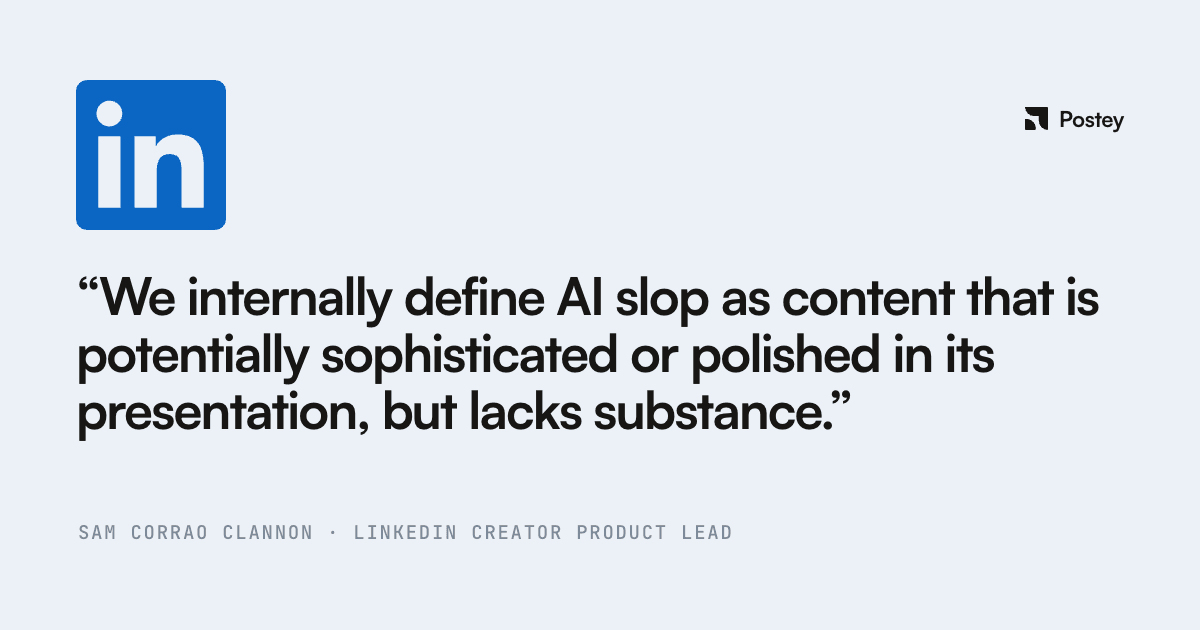
Sam Corrao Clannon, LinkedIn's Creator Product Lead, defines AI slop as "content that is potentially sophisticated or polished in its presentation, but lacks substance." Chief Product Officer Hari Srinivasan added that LinkedIn looks "at many signals together" and has safeguards so individual feedback can't unfairly target other members.
Myths worth retiring
- Dwell time is not a 2026 discovery. What's new is that it feeds a sequential transformer model instead of scoring each post alone.
- "Turn on Creator Mode for reach" is outdated. LinkedIn folded Creator Mode into automatic profile detection, and any content still telling you to toggle it on is stale.
- "Knowledge and advice" content gets a magic boost. It doesn't. This has been LinkedIn's stated priority for years and fits the 2026 moves, but treat any specific 2026 percentage as unverified.
What this means for what you post
- Write posts an LLM can read the topic of. Clear, specific language about what you do helps the embedding model connect you to the right audience. Vague thought-leadership language does the opposite.
- Skip comment pods and automation entirely. LinkedIn's March 2026 update targets them, and they're now suppressed rather than discouraged.
- Write for dwell time, not skim time. A post that takes 15 seconds to read and think about feeds a model that tracks exactly that.
- Treat any engagement number, yours or a competitor's, with the Pangram Labs finding in mind. A third of LinkedIn's comment volume this year was bots, so a like or comment count alone proves nothing.
The under-covered story isn't dwell time. It's that LinkedIn's own numbers are now hard to trust, on a platform that's trying to fix that. Write like a specific person saying something specific, skip the automation, and let the writing earn the attention. Draft once in Postey and it queues a platform-specific version, so the consistency part stops being the hard part.